Is Bangladesh the Right Choice for Your Clothing Order?
Updated: Sep 23
Bangladesh is one of the world’s biggest clothing production hubs, but that does not mean it is the right fit for every order. The country can be excellent for volume, price, and dependable production in common apparel categories. It can also be slow, complex, or unsuitable if the order is small, highly technical, or still changing after sampling.
The best answer is practical: Bangladesh is a strong choice when the product, quantity, timeline, and compliance expectations match what its factories do well. If they do not, a cheaper unit price may not save money once delays, rework, freight, and communication costs are added.

Bangladesh is strong when the order suits its production base
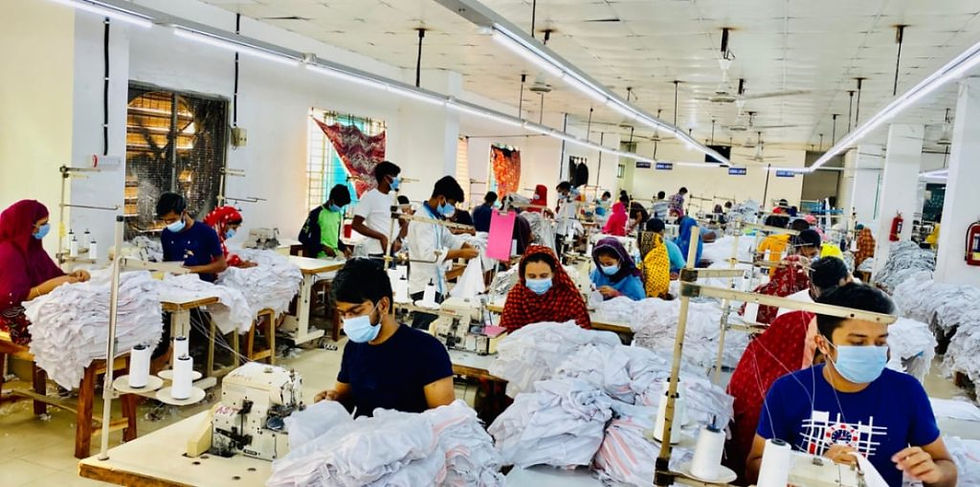
Bangladesh built its reputation on ready-made garments. That includes everyday clothing produced in large runs, especially items where process control matters more than complex construction.
Common categories include:
T-shirts and polos
Sweatshirts and hoodies
Joggers and fleece pieces
Woven shirts
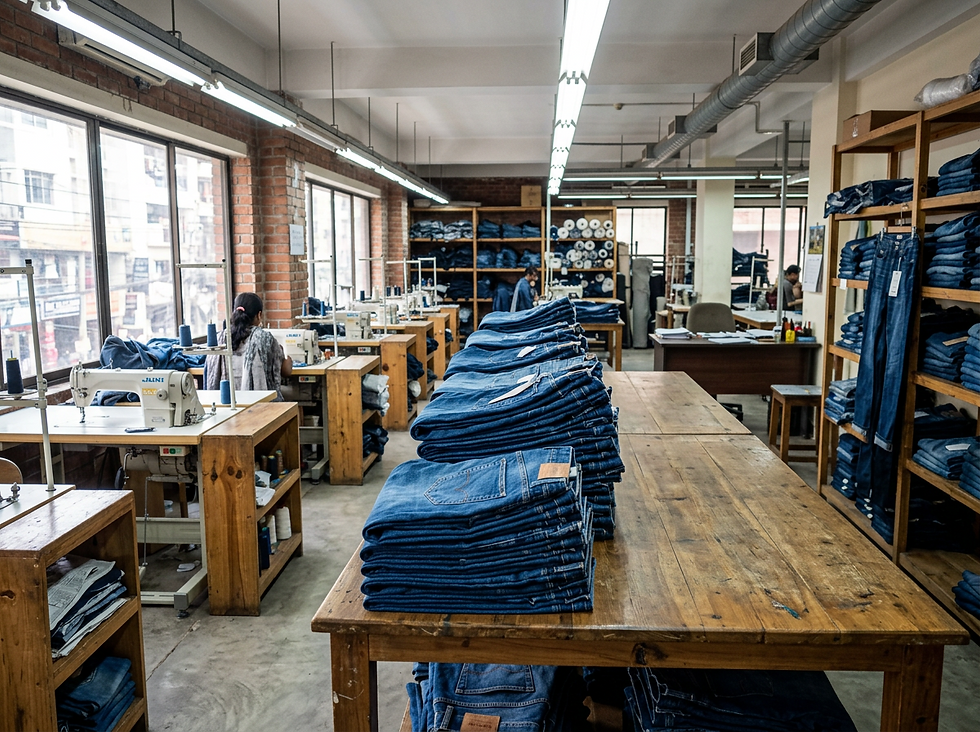
Denim and casual trousers
Basic dresses and skirts
Uniforms and workwear
Underwear, socks, and simple activewear
For brands, wholesalers, merchandisers, and importers, the main appeal is usually clear. Bangladesh offers strong production capacity at competitive prices, especially when compared with many higher-cost manufacturing regions.
That capacity matters. A factory used to making hundreds of thousands of similar garments can set up production lines, train operators, manage trims, and hit repeat specifications in a way smaller workshops may struggle to match.
Price is another major draw. Labour costs have risen, and buyers should not assume Bangladesh is always the cheapest option. Still, it remains cost-competitive for many garments, particularly basic and mid-market products. For plain T-shirts, fleece, denim, and large uniform programs, the economics can be compelling.
There is also a mature export system. Many manufacturers understand international buyer requirements, including packaging standards, shipping documentation, inspection processes, and third-party audits. That does not remove risk, but it gives buyers a stronger base than sourcing from an untested production region.
For Australian buyers, Bangladesh can also make sense when orders are planned well ahead. Sea freight takes time, and the route from Chattogram to Australian ports usually needs a long lead-time buffer. Air freight can rescue urgent orders, but it often damages the margin on low to mid-priced apparel.
The country is best viewed as a planned production destination, not a last-minute fix.
The fit depends on the type of garment you need
Bangladesh is not one single manufacturing option. A high-volume knitwear factory, a denim mill-linked supplier, and a small woven shirt maker can feel like completely different partners.
The first question is not “Is Bangladesh good?” The better question is “Is Bangladesh good for this specific garment?”
Garment type | Bangladesh is usually suitable when | Watch-outs |
Basic knitwear | Quantities are steady and fabric is common | Colour consistency and shrinkage need testing |
Denim | The style uses familiar washes and standard fits | Complex washes may need careful approval |
Woven shirts | The design is repeatable and sizing is clear | Fit tolerance and fabric movement can cause issues |
Activewear | The fabric and construction are not too technical | Performance fabrics may rely on imported materials |
Outerwear | The design is simple to moderately complex | Technical waterproofing can be harder to source |
Fashion styles | The order has enough volume and lead time | Frequent design changes can slow everything down |
Bangladesh often performs best when the product has already been developed. If a garment still needs heavy design support, pattern work, fabric trials, and fit exploration, the sampling stage can stretch out.
That does not mean development is impossible. Many factories have experienced sample rooms. The issue is that long-distance development adds friction. A missing measurement, vague tech pack, or unclear fabric reference can lead to several rounds of revisions.
For sourcing clothes from Bangladesh, the strongest projects usually include:
A clear tech pack
Accurate size charts
Approved fabric quality
Pantone or lab-dip colour references
Trim details
Packaging instructions
Target price
Order quantity by colour and size
Required testing standards
If those details are missing, the lowest quote may come from a supplier making assumptions. That quote can change once the garment is fully understood.

Cost is only one part of the decision
Bangladesh is often considered because of price, but unit cost is only one line in the real landed cost.
A garment that costs less at the factory can become expensive if sampling drags on, rework is needed, cartons miss a vessel, or the product arrives with a quality issue. Good sourcing looks at the full chain.
Key cost areas include:
Factory price
This covers fabric, trims, cutting, sewing, finishing, packing, and the factory margin. It may be quoted FOB, which means the buyer handles freight, insurance, duty, and local charges after the goods leave the origin port.
Sampling and development
Some factories charge for samples, especially for complex items or low-probability enquiries. Sample courier fees can also add up fast between Bangladesh and Australia.
Testing and compliance
Fabric composition, colour fastness, shrinkage, seam strength, restricted substances, organic certification, or children’s wear checks may be needed. The right tests depend on the product and selling market.
Inspection
Pre-shipment inspections are common. They are not a guarantee of perfection, but they reduce the chance of receiving a full shipment with preventable defects.
Freight and local charges
Sea freight is usually the economical choice for bulk apparel. Air freight is much faster, but it can turn a profitable order into a weak one.
Duties and taxes
Australian buyers should confirm duty treatment, GST, and documentation requirements with a customs broker before ordering. Rules can vary by product, origin proof, and import setup.
A realistic comparison should include all of these items. A supplier offering a garment at a lower unit price may still be the wrong choice if they have weak quality control or unclear shipping processes.
The best suppliers do not only quote. They ask questions. They clarify the fabric, construction, measurements, wash standards, finishing, packing ratio, and inspection requirements before giving a final price.
Compliance and worker safety need careful checking
Bangladesh’s garment sector has faced serious safety and labour scrutiny, especially after the 2013 Rana Plaza disaster. Since then, many export factories have undergone building inspections, safety upgrades, and buyer audits. The sector is more closely watched than it once was, but buyers still need to verify each supplier, not rely on broad assumptions.
Compliance is not just an ethical issue. It also protects the order. A factory with poor systems is more likely to miss deadlines, fail audits, use unauthorised subcontractors, or produce inconsistent goods.
Ask for current documents, then check what they actually cover. A certificate is only useful if it applies to the production site making the order, the product category involved, and the date of production.
Common checks may include:
Social compliance audits such as BSCI, WRAP, or SMETA
Building and fire safety evidence
Chemical and restricted substance controls
OEKO-TEX, GOTS, or recycled content certificates where relevant
Product testing reports from recognised labs
Factory licence and export registration details
Subcontracting policy
For higher-risk categories, such as children’s clothing, sleepwear, workwear, or chemical-heavy washes, compliance needs extra care. Denim washing, printing, dyeing, and finishing all raise questions about water use, chemical handling, and waste control.
Buyers should also be wary of perfect-looking paperwork from an unknown supplier. It is reasonable to request a video walk-through, recent audit reports, production photos, references, and third-party checks. For larger orders, an in-person visit or independent factory verification can be worth the cost.
Good factories do not treat compliance questions as an insult. They expect them.

Lead times and communication can decide the outcome
Many Bangladesh orders succeed or fail before bulk production begins. The early stages matter most.
A typical apparel order includes:
Supplier selection
Quotation
Prototype or fit sample
Fabric and trim approval
Lab dips or strike-offs
Pre-production sample
Bulk production
Inspection
Shipment
10. Delivery and local clearance
Each stage needs a decision. If approvals are slow, the final delivery date moves. If feedback is vague, the supplier may guess. If the buyer changes fabric, colour, fit, or packaging after approval, the timeline can shift by weeks.
Communication style also matters. Many factories are capable and experienced, but a buyer still needs clear written instructions. Short, specific feedback works better than broad comments.
Instead of saying “make the fit better,” use details such as:
Increase chest width by 2 cm across all sizes
Reduce sleeve length by 1.5 cm
Keep the neck rib quality from the previous sample
Match the approved lab dip for colour reference
Use 180 gsm single jersey with the same shrinkage target
Time zone differences between Australia and Bangladesh are manageable, but they still affect daily communication. A delay of one business day for each clarification can quickly stretch sampling.
Seasonal pressure also matters. Large international buyers book capacity well in advance. If a factory is full, smaller orders may face longer lead times or less attention.
A good rule is simple: do not place a time-sensitive order until the sample, fabric, price, production slot, and shipping plan are clear.
When Bangladesh may not be the right choice
Bangladesh is not ideal for every buyer or every product.
It may be a weaker fit when the order needs:
Very low minimum quantities
Fast local replenishment
Heavy product development from scratch
Highly technical performance fabrics
Luxury finishing in small runs
Frequent style changes
Rapid trend response
Close in-person fitting and approvals
Small brands often run into minimum order quantity issues. A factory built for large export runs may not be interested in 100 units per style, or the price may lose the advantage that made Bangladesh attractive in the first place.
There are exceptions. Some smaller manufacturers accept modest quantities, especially for standard garments. But buyers should check whether the factory is genuinely set up for small runs or simply taking the order between larger jobs.
Bangladesh may also be less suitable when near-market speed matters more than price. If a retailer needs fast replenishment, local or regional manufacturing may reduce risk, even at a higher unit cost.
For premium garments, the answer depends on the factory. Some Bangladeshi suppliers produce high-quality apparel for well-known buyers. Still, buyers should not assume every factory can handle refined finishing, specialist fabrics, or tight tolerance work.
The right decision is not based on country reputation alone. It comes down to factory capability.

The verdict is clear if the order is well planned
Bangladesh is the right choice when the order has enough volume, clear specifications, suitable product type, realistic lead time, and firm quality controls. It is especially strong for basic and mid-market apparel where repeatable production, price, and export experience matter.
It is less suitable for tiny runs, urgent orders, vague designs, or garments that need constant changes during development. In those cases, a closer or more flexible supplier may cost more per unit but save money overall.
Before placing an order, test the fit with a simple checklist:
Is the garment category common in Bangladesh?
Is the order quantity attractive to the right factory?
Is the tech pack complete?
Are fabric, trims, colours, and measurements clear?
Has the supplier shown relevant samples?
Are compliance documents current and site-specific?
Is the lead time realistic, including sampling and freight?
Has the landed cost been calculated, not just the factory price?
Will an inspection happen before shipment?
If most answers are yes, Bangladesh deserves serious consideration. If several answers are unclear, fix those gaps before chasing quotes.
The strongest clothing orders come from matching the product to the right production base. Bangladesh can be an excellent choice, but it rewards buyers who prepare well, communicate clearly, and treat quality, compliance, and timing as part of the price.
For complete buying guide, please read How to Source Clothing from Bangladesh A Buyers Guide
Frequently Asked Questions
1. Is Bangladesh suitable for every clothing order?
Bangladesh is especially suitable for knitwear, woven garments, denim, basics, uniforms and larger production runs. It may be less suitable for very small orders, highly complex products or extremely short deadlines.
2. What types of garments are best sourced from Bangladesh?
Commonly suitable categories include T-shirts, knitwear, denim, woven tops, trousers, outerwear, uniforms and other high-volume apparel.
3. What is the minimum order quantity?
Minimum order quantities vary by factory, fabric and garment construction. Larger quantities usually provide better pricing, while smaller runs may require a higher unit cost or a specialist supplier.
4. Is clothing production in Bangladesh cost-effective?
It can be cost-effective because of Bangladesh’s manufacturing scale and supplier base. You should compare the full landed cost, including fabric, trims, sampling, freight, duties, quality control and compliance requirements.
5. How long does production usually take?
Lead times depend on product complexity, fabric availability, order quantity and factory capacity. Allow time for development, sampling, approvals, production, inspection and shipping.
6. How can I ensure consistent garment quality?
Use clear technical packs, approved samples, measurable quality standards, inline inspections and final inspections before shipment. Regular communication helps resolve issues early.
7. How do I choose a reliable factory?
Review the factory’s product experience, capacity, quality systems, compliance records, references and communication. Start with development and sampling before committing to larger production.
8. Can Bangladesh support ethical and compliant manufacturing?
Yes, but compliance must be verified factory by factory. Request current audit reports, certifications and evidence of worker-safety, labour and environmental practices.
9. How important is communication when sourcing from Bangladesh?
Clear specifications, realistic timelines, regular approvals and a reliable local liaison can significantly reduce misunderstandings and delays.
10. When might another sourcing country be a better option?
Another country may be preferable for very small quantities, highly specialised techniques, urgent delivery, local-market production or products better matched to a different supplier base.
Comments