Bangladesh vs China for Apparel Sourcing Which Is the Better Choice
Updated: Sep 23
Choosing between Bangladesh and China is rarely a simple price comparison. The better sourcing country depends on what is being made, how quickly it is needed, how much control is required, and how much risk the buyer can carry.
China and Bangladesh both have deep apparel experience, strong factory bases, and global export reach. They also serve different needs. China is hard to beat for speed, fabric access, product variety, and complex construction. Bangladesh is highly competitive for high-volume basics, especially cotton garments, where cost control matters.
For many brands, the smartest answer is not one country or the other. It is knowing when each one fits.

The better choice starts with the product
The product should lead the sourcing decision. A basic cotton T-shirt, a bonded activewear jacket, and a fashion dress with trims do not belong in the same sourcing conversation.
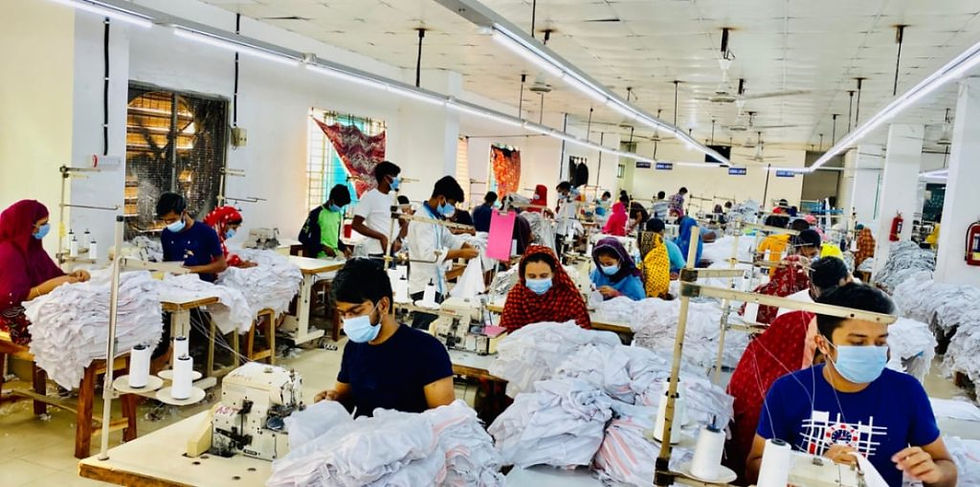
Bangladesh is especially strong in large-volume basics. Think T-shirts, hoodies, sweatshirts, polos, woven shirts, denim, chinos, pyjamas, and simple children’s wear. The country has built a large ready-made garment sector around labour-intensive production and steady export programmes.
China has a wider manufacturing base. It can handle basics, but its real strength is range. Buyers often look to China for outerwear, activewear, synthetic garments, technical fabrics, seamless knits, swimwear, lingerie, fashion-led pieces, and products with special trims or construction methods.
That matters because complexity changes everything. A lower cut-and-sew price means little if the factory cannot source the right fabric, achieve the wash effect, apply performance finishes, or keep tolerances tight at scale.
As a broad guide:
Sourcing need | Bangladesh is often stronger | China is often stronger |
Cotton basics | Yes | Yes, but usually not the cheapest |
Denim and casualwear | Yes | Yes |
Activewear and synthetics | Limited but growing | Strong |
Outerwear | Some capability | Strong |
Fashion styles with many trims | Mixed | Strong |
Small test runs | Harder in many cases | Easier to find options |
High-volume repeat orders | Strong | Strong |
Fast fabric sourcing | More limited | Strong |
This is why Bangladesh vs China apparel sourcing should start with a product map, not a country preference. List the fabric, trims, decoration, wash, fit standard, compliance requirements, volume, shipment window, and target landed cost. The right country becomes much clearer.
China gives more control over materials, speed, and variety
China’s biggest advantage is not only factory capacity. It is the supply chain around the factory.
Many Chinese garment hubs sit close to fabric mills, dye houses, trim suppliers, print shops, embroidery units, wash plants, packaging suppliers, and freight services. That makes development faster. It also reduces the number of moving parts a buyer has to manage.
This helps in several practical ways.
Fabric choice is wider
China has strong access to cotton, polyester, nylon, spandex blends, recycled synthetics, coated materials, bonded fabrics, jacquards, lace, mesh, fleece, rib, and performance textiles. When a style depends on a specific hand feel or technical finish, China often gives buyers more choices.
Sampling is usually faster
Because materials and trims are often nearby, suppliers can develop samples quickly. If a zipper is wrong, a rib colour is off, or a print needs adjustment, the supplier may be able to solve it locally. That can save weeks during development.
Complex construction is easier to place
China has long experience across many apparel categories. Factories can be highly specialised. One supplier may focus on down jackets, another on seamless activewear, another on high-stretch leggings, another on occasionwear. That specialisation helps when quality depends on skill, machinery, and process control.
Smaller runs may be easier to negotiate
China can still be challenging for small brands, especially when custom fabric is involved. But its huge supplier base means buyers can often find factories or trading companies willing to support smaller runs, sample-heavy development, or mixed-category collections.
The trade-off is cost. Labour and operating costs in China have risen over many years. For simple garments, China may struggle to match Bangladesh on make price. Some suppliers also prefer higher-value products, which can make very basic orders less attractive unless volumes are large.

Bangladesh is powerful for cost-focused volume programmes
Bangladesh is one of the world’s most important garment manufacturing countries for a reason. It has a large labour force, deep experience in apparel exports, and strong capacity in high-volume cut-and-sew production.
For brands that sell core items season after season, Bangladesh can be a very strong fit.
The country performs best when the brief is clear and repeatable:
Cotton T-shirts
Fleece hoodies and sweatshirts
Polo shirts
Woven shirts
Denim jeans and jackets
Chinos and casual trousers
Basic dresses and skirts
Sleepwear and simple underwear
Uniform-style garments
Children’s basics
Cost is the visible advantage, but consistency can be just as valuable. Many Bangladeshi factories are built for large programmes with efficient sewing lines, clear production planning, and volume output. For retailers and wholesalers that need dependable replenishment of proven styles, that can be a strong match.
Bangladesh also has an established export culture. Many factories understand international buyer requirements, including testing, labelling, carton packing, inspections, and shipping documents. Larger suppliers may hold recognised social and quality certifications, although buyers still need to verify each factory rather than assume compliance.
The main limitation is upstream supply. Bangladesh has strong garment assembly capacity, but it often relies on imported yarns, fabrics, dyes, chemicals, trims, or specialised materials, depending on the product. This can add time and complexity.
That does not make Bangladesh weak. It means it works best when lead times are planned well and the product does not depend on difficult-to-source materials.
For a stable hoodie programme, Bangladesh can be excellent. For a capsule collection with nylon ripstop, bonded seams, water-repellent finish, custom trims, and quick development changes, China may be the safer choice.
Cost should be judged as landed cost, not factory price
The cheapest quoted unit price is not always the cheapest outcome. Apparel sourcing costs include much more than cut, make, and trim.
A buyer should compare landed cost, which includes:
Unit price from the supplier
Fabric and trim costs
Testing and inspection
Labelling and packaging
Inland transport
Sea or air freight
Duties, taxes, and customs charges
Rework, delays, and quality issues
Inventory risk from long lead times
Bangladesh often wins on labour-intensive basics. If the fabric is simple and the order quantity is high, the make cost can be highly competitive. This is where the country shines.
China can look more expensive at first, but the final cost may be closer than expected when the product is complex. If China can source the fabric faster, reduce sampling rounds, avoid quality failures, and ship on a tighter schedule, the higher unit price may be justified.
There is also the cost of delay. A low-cost order that misses the selling season is not low cost. This is especially true for fashion items, seasonal ranges, event-based campaigns, and fast-moving ecommerce collections.
Buyers should quote the same style in both countries using the same tech pack. The quote should include fabric details, trims, workmanship, testing, carton packing, shipment terms, and lead time. Without that, comparisons become guesswork.

Lead time and flexibility can change the answer
Lead time is one of the biggest differences between China and Bangladesh.
China often has an advantage in speed because many materials, trims, and production services are available locally. A supplier may be able to move from sample to production faster, especially if fabric is in stock or can be sourced nearby.
Bangladesh can also deliver reliably, but buyers often need to allow more planning time. If materials are imported, fabric booking and shipping can add weeks. For large retail programmes, that may be fine. For fast product testing, it can be harder.
Flexibility is also different.
China is often better suited to:
Shorter development cycles
Multiple product categories
Frequent design changes
More complex fit or construction
Multi-material garments
Smaller initial production runs
Bangladesh is often better suited to:
Predictable repeat orders
Large volume basics
Stable fabric and colour programmes
Longer planning calendars
Cost-sensitive core products
This is why many mature brands use both. A brand might source its core T-shirts and sweats from Bangladesh, then use China for outerwear, activewear, accessories, and urgent development. Splitting production this way reduces dependence on one country and lets each supplier do what it does best.
There is one caution. A divided sourcing base needs strong management. Different countries may produce slightly different fits, shades, stitches, and finishes unless the buyer controls standards tightly. Tech packs, approved samples, testing requirements, and inspection criteria need to be consistent.
Compliance, quality, and risk need factory-level checks
Country comparisons can be useful, but factory selection matters more than national reputation.
Both Bangladesh and China have excellent suppliers. Both also have factories that are not suitable for serious buyers. A sourcing decision should never rely only on country-level assumptions.
Before placing an order, buyers should check:
Factory ownership and export licence
Product category experience
Current audit status
Fire, electrical, and building safety controls
Worker welfare policies
Quality management system
In-house versus subcontracted processes
Testing partners and inspection history
Capacity during the required production window
Bangladesh has had intense global scrutiny around garment safety, especially after past industrial tragedies. That pressure led to major safety programmes and stronger attention to compliance among export-focused factories. Many larger factories now work under strict buyer requirements.
China has a long-established manufacturing base and many highly capable suppliers, but compliance still varies. The risk may sit in unauthorised subcontracting, excessive overtime, poor chemical handling, or unclear supply chain visibility.
The practical answer is the same in both countries: verify. Ask for audit documents, but do not stop there. Use factory visits where possible, third-party inspections, production checks, lab testing, and clear purchase terms.
Quality also needs active control. A good pre-production sample does not guarantee good bulk output. Buyers should approve:
Size set samples
Fabric colour and shrinkage tests
Print, embroidery, or wash standards
Sealed pre-production samples
Inline inspection results
Final random inspection reports
If the order is high value or the supplier is new, extra inspection is usually cheaper than fixing problems after shipment.

When to choose Bangladesh and when to choose China
A clear sourcing rule helps avoid endless debate.
Choose Bangladesh when the order is price-sensitive, volume is meaningful, the product is relatively simple, and the buying calendar allows enough time. It is a strong choice for cotton basics, denim, fleece, and repeat programmes where cost discipline matters.
Choose China when the product needs material variety, faster development, complex construction, technical fabrics, special trims, or tighter speed to market. It is often the better choice for activewear, outerwear, fashion-led styles, and mixed-category ranges.
A simple decision framework works well:
If the priority is | Better starting point |
Lowest cost on cotton basics | Bangladesh |
Fast sampling and fabric development | China |
Large repeat orders | Bangladesh |
Complex technical garments | China |
Denim and casualwear | Bangladesh or China |
Small test runs | China |
Stable long-term volume | Bangladesh |
Broad product range from one supplier base | China |
The best sourcing teams do not treat this as a permanent choice. They review each product line. They test suppliers. They compare landed cost. They track quality performance. They build backup options before a problem occurs.
For many brands, the strongest setup is a dual-country model:
Bangladesh for core volume styles
China for complex, seasonal, or fast-moving products
Shared quality standards across both
Clear supplier scorecards
A backup factory for key styles
This lowers risk and gives more control. It also prevents one country from carrying every sourcing burden.
The takeaway
Bangladesh is often the better choice for cost-effective, high-volume basics. China is often the better choice for speed, complexity, materials, and product variety.
The real answer comes from the garment itself. If the style is simple, repeatable, and margin-sensitive, start with Bangladesh. If the style needs technical fabric, fast changes, special trims, or complex construction, start with China.
Do not source by country reputation alone. Source by product fit, factory capability, landed cost, lead time, and verified compliance. That is how the better choice becomes clear.
For complete buying guide, please read How to Source Clothing from Bangladesh A Buyers Guide
FAQs
Which country offers lower production costs? Bangladesh typically offers lower production costs compared to China.
Where can I find higher-quality apparel? China is often regarded as having a wider range of quality options.
Which country has shorter lead times? China generally has shorter lead times due to better logistics.
Are there sustainability concerns in both countries? Yes, both countries face scrutiny regarding labor practices and sustainability.
Comments